
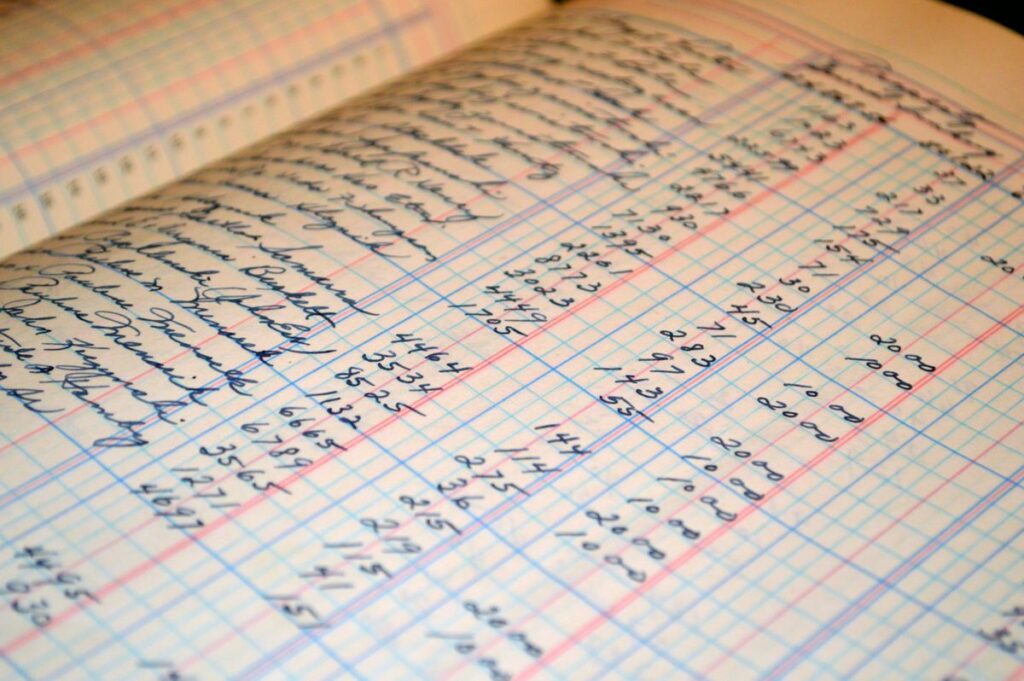
The bookkeeping vs accounting distinction confuses more business owners than almost any other question we are asked, and the confusion is reasonable, because both disciplines touch the same records and often sit under the same administrative and financial support services. The two roles are not interchangeable. One records what happened. The other explains what it means.
Getting the bookkeeping vs accounting difference right matters for practical reasons. Hiring an accountant to clean up a year of unsorted receipts is an expensive use of a specialist. Asking a bookkeeper to interpret a complex tax position asks for judgment outside that role. Below, we walk through what each function does, five differences that separate them, and how to tell which support your organization actually needs right now.
Table of Contents
- What Bookkeeping Actually Does
- What Accounting Actually Does
- Bookkeeping vs Accounting: Five Key Differences
- Where the Handoff Between the Two Happens
- Which Support Your Organization Needs Right Now
- Preparing Your Records Before Anyone Analyzes Them
- Frequently Asked Questions
What Bookkeeping Actually Does
Bookkeeping is the disciplined, ongoing record of every financial transaction a business or household makes. Money in, money out, dated, categorized, and matched against a bank statement.
In practice, that means recording sales and deposits, entering vendor bills, coding expenses to the right account, reconciling bank and credit card statements each month, tracking who owes you money and whom you owe, and keeping payroll entries in step with the general ledger. It is detail work performed on a rhythm. A bookkeeper closes each month with balances that tie out, so nothing is lost between January and December.
Bookkeeping is not glamorous, and it is not meant to be. Its value is reliability. When the underlying records are accurate and current, every decision made on top of them stands on solid ground. When they are not, everything downstream inherits the error.
What Accounting Actually Does
Accounting begins where the recorded data ends. It takes the ledger a bookkeeper maintains and turns it into statements, interpretation, and forward-looking guidance.
An accountant assembles the income statement, balance sheet, and statement of cash flows. They apply accrual adjustments, review depreciation schedules, examine trends across periods, and explain why margins moved. In many organizations, the accountant also prepares or reviews tax filings and advises on structure and strategy. A Certified Public Accountant carries a license, meets continuing education requirements, and can represent a client before tax authorities.
Put simply, accounting answers questions that begin with why and what next. Bookkeeping answers questions that begin with what and when.

Bookkeeping vs Accounting: Five Key Differences
The bookkeeping vs accounting comparison comes down to five separations that hold across nearly every organization, from a two-person shop to a mid-sized company with departments.
1. Purpose. Bookkeeping exists to create a complete and accurate record. Accounting exists to interpret that record. The first is documentation. The second is analysis.
2. Timing. Bookkeeping is continuous. Transactions are entered as they occur, and accounts are reconciled monthly. Accounting is periodic. Statements are produced at the close of a month, a quarter, or a fiscal year, once the underlying records are settled.
3. Skill and credential. Bookkeeping rewards accuracy, consistency, and familiarity with a chart of accounts. Accounting requires formal training in accounting standards, and in the case of a CPA, a state license and continuing education. Neither role is lesser. They are different professions with different tools.
4. Output. Bookkeeping produces the general ledger, reconciled bank statements, aged receivable and payable reports, and payroll records. Accounting produces financial statements, tax filings, budgets, forecasts, and written interpretation of results.
5. Decisions supported. Bookkeeping supports operational decisions. Can we cover payroll on Friday? Which customer is ninety days late? Accounting supports strategic decisions. Should we take on this debt? Is this line of business profitable once overhead is allocated? Understanding bookkeeping vs accounting in these terms tells you which question you are trying to answer, and therefore whom to call.
Where the Handoff Between the Two Happens
The bookkeeping vs accounting relationship is sequential, not competitive. The handoff happens at the month-end close.
A bookkeeper finishes reconciling the bank accounts and confirms that the ledger balances. Those figures pass to the accountant, who reviews accruals, adjusts entries that cross period boundaries, and produces statements the owner can read. At year end, the same records support the tax return.
When the handoff is clean, the accountant spends time on judgment. When it is not, the accountant spends time on cleanup, which is the least efficient way to fix a record that should have been maintained all along. Much of the frustration owners describe with their year-end filings traces back to records that were never reconciled month by month.
Which Support Your Organization Needs Right Now
Most organizations need both, but rarely in equal measure and rarely at the same moment. The bookkeeping vs accounting decision usually resolves once you name the problem you are living with.
If your receipts sit in a folder, your bank feed has not been categorized since spring, or you cannot say today what your outstanding invoices total, the need is bookkeeping. No analysis will help until the record is current.
If your books are clean and reconciled but you cannot explain why profit fell while revenue rose, or you are weighing a change in entity structure, the need is accounting. That work belongs with a licensed CPA or tax professional who can review your specific circumstances.
For families managing an aging parent’s affairs, or executives handling personal and business obligations at once, the practical answer is usually steady bookkeeping and administrative support first, with an accountant engaged at defined points in the year. The bookkeeping vs accounting balance in those situations tilts heavily toward keeping the record orderly and the obligations met on time.
Preparing Your Records Before Anyone Analyzes Them
Whichever side of the bookkeeping vs accounting divide you are on, the records themselves have to be preserved. The Internal Revenue Service advises keeping records for three years in most ordinary situations, with longer retention when other circumstances apply, and separate retention rules for employment tax records. Insurers and lenders often have requirements of their own that extend beyond tax needs.
A practical standard: bank and credit card statements filed by month, receipts matched to the transactions they support, payroll registers kept complete, and prior year filings stored where a successor could find them. Digital copies are acceptable, provided they are legible, backed up, and organized in a way that someone other than you can navigate.
This is where careful administration pays for itself. Documentation is not the point. Retrievability is. A record no one can locate under pressure protects no one.
Frequently Asked Questions
Is bookkeeping the same as accounting?
No, bookkeeping and accounting are separate functions: bookkeeping records and organizes transactions, while accounting interprets those records and produces financial statements. They depend on each other, which is why they are frequently confused, and why our bookkeeping and accounting support services are described separately rather than as one offering.
Do I need a bookkeeper if I already have an accountant?
In most cases yes, because an accountant works from records that someone has to maintain throughout the year, and that maintenance is bookkeeping. Owners who skip it often find that the accountant’s engagement expands into reconstruction work, a pattern we address in our frequently asked questions.
Can a bookkeeper file my taxes?
Tax preparation and tax advice belong to a licensed CPA, enrolled agent, or tax professional, not to a bookkeeper. A bookkeeper prepares the accurate, reconciled records those professionals rely on, and if you are unsure how to divide the work, a brief consultation with our team will clarify what each role covers.
What does bookkeeping vs accounting mean for a small business owner?
For a small business owner it means treating daily record keeping and periodic financial analysis as two separate commitments, each with its own attention and its own person. Owners who separate the two in their planning tend to enter tax season without surprises, and our administrative services overview explains where each responsibility can be delegated.
Related Guides
Discuss Your Records With Ledger Group Services
If you are unsure whether your organization needs steady bookkeeping, periodic accounting review, or both, we are glad to talk it through and give you a clear recommendation. You can request a consultation and we will review where your records stand today.
More on Bookkeeping & Accounting
- When Should a Small Business Hire an Administrative Assistant?
- How to Pay Yourself as a Business Owner: 4 Methods and How to Choose the Right One
- What Is a Chart of Accounts and How Do You Set One Up?
- How Do You Catch Up on Bookkeeping When You Are Months Behind?
- How to Separate Business and Personal Finances: 7 Proven Steps
- How Long Do You Need to Keep Business Records? 7 Rules That Keep You Audit Ready
- When Should You Outsource Bookkeeping? 7 Signs It’s Time
- Month-End Close Checklist: 9 Simple Steps to Clean Books
- Financial Statements Explained: A Small Business Owner’s Guide
- How to Keep Audit-Ready Financial Records: A Small Business Guide
- What Does a Professional Bookkeeper Do? (and Why Your Mississippi Business Needs One)
Explore the site
Latest from the blog
- How Do You Manage Finances for an Aging Parent?
- Can You Be Your Own Registered Agent in Mississippi?
- Why Do Grant Applications Get Rejected?
- What Should Be in an Employee Handbook for a Small Business?
- How Do You Set Up Payroll for Your First Employee?
- Employee vs Independent Contractor: How Do You Tell Which One You Have?
- What Does a Registered Agent Do? 7 Duties Explained for Mississippi Businesses